Pictionary words make or break the game. Pick ones that are too easy and the round ends in three seconds with no laughs. Pick ones that are too hard and your teammate stares at a tangle of lines while the timer runs out. The fun lives in the middle, where the word is just tricky enough to challenge the artist without being impossible to guess.
The problem is that coming up with good words on the spot is hard, and the official deck runs out fast once you have played a few times. That is why a ready bank of options, sorted by difficulty, is worth more than the game box itself. With the right list, you can match the challenge to the players, whether that is a table of six year olds or a competitive group of adults.
This guide gives you 300 Pictionary words organized from easy to hard, including dedicated sets for kids, funny rounds, and tricky phrases. It also covers how to run the game well, how to choose words fairly so no team gets an unfair set, and why this simple drawing game is quietly one of the best learning tools around. Use it as your permanent word bank and you will never run dry mid game.
Table of Contents
What Makes a Good Pictionary Word
Not every word works on a drawing pad. The best Pictionary words share a few traits, and understanding them helps you judge any word before you use it.
- It is drawable. Concrete nouns like “house” or “boat” beat abstract ideas, at least for easier rounds. You can sketch a kite. You cannot easily sketch “honesty.”
- It has a clear mental image. Words that everyone pictures the same way, like “sun” or “ladder,” are guessed fast. Words with fuzzy or varied images take longer.
- It matches the player. A word that is perfect for an adult can stump a child, and a word that delights kids bores experienced players. Difficulty is relative to who holds the pen.
- It rewards cleverness. The most enjoyable Pictionary words sit at the edge of drawable, where a smart player finds a visual shortcut. That is where the table leans in.
Abstract words and phrases are not off limits. They simply belong in the harder categories, where the challenge is the point.
How to Play Pictionary
The rules are simple, which is why the game suits any group.
- Split into two teams.
- One player from a team draws a word while their teammates guess, with no letters, numbers, or speaking allowed from the artist.
- The team scores if they guess correctly before the timer ends, usually within sixty to ninety seconds.
- Play passes to the other team, and teams take turns until someone reaches the target score.
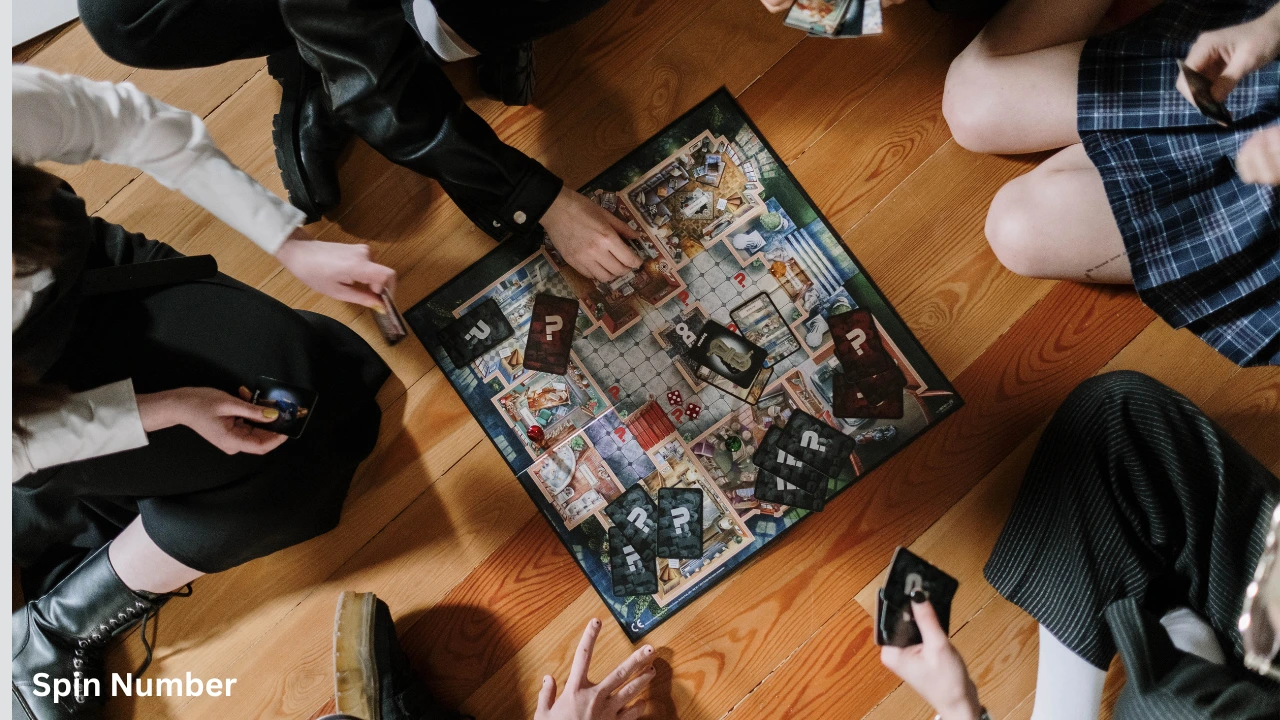
You need at least four people for two teams of two, though the game gets livelier with six to ten. In person, you draw on paper or a whiteboard. Over a video call, most players use a shared screen or a drawing app, which makes it an easy remote activity.
The one piece of friction is choosing words without anyone seeing them in advance. A spin wheel solves this neatly. Load a set of Pictionary words and spin to land on a random one, which works as a quick pictionary word generator that keeps selection fair and hidden until the spin. To decide who draws next, a random name picker removes the usual argument over whose turn it is.
Why Difficulty Levels Matter
Matching the word to the player is the single biggest factor in whether a round is fun. A mismatched word does not just end badly, it deflates the whole table.
Give a young child “photosynthesis” and they freeze. Give a competitive adult “cat” and the round is over before it starts, with no challenge and no laughs. Sorting your Pictionary words by difficulty lets you hand each player a fair shot, which keeps every round tense and enjoyable.
A good approach is to mix levels within a game. Start teams on easy Pictionary words to build confidence, then raise the difficulty as the score tightens. The categories below are built for exactly this, so you can pull from the right level at the right moment.
The 300 Pictionary Words
Use these Pictionary words as your word bank. Pick a category that fits your group, or load a set onto a wheel and spin for a random pick.
Easy Pictionary Words (50)
These simple, concrete nouns suit young players, beginners, and fast warm up rounds. Each one has a single clear image that almost anyone can sketch and guess in seconds.
apple, sun, house, cat, dog, tree, car, ball, fish, hat, star, book, cup, key, shoe, boat, moon, flower, bed, door, chair, clock, cake, egg, leaf, rain, kite, drum, balloon, banana, heart, ladder, lamp, pencil, ring, sock, spoon, table, train, umbrella, bird, cloud, fire, glasses, hand, ice cream, nose, pizza, snake, wheel
Medium Pictionary Words (50)
These need a little more detail or a clever angle, which suits teens and adults who want a real challenge without an impossible one. They are drawable but reward a thoughtful sketch.
lighthouse, volcano, windmill, telescope, castle, anchor, compass, hammock, fountain, igloo, parachute, scarecrow, treasure chest, waterfall, campfire, fireworks, helicopter, microscope, skeleton, submarine, tornado, lantern, mailbox, sandcastle, seesaw, beehive, drawbridge, escalator, greenhouse, jellyfish, kangaroo, octopus, peacock, pinwheel, raincoat, rollercoaster, sailboat, snowflake, sunflower, hourglass, magnet, paintbrush, rainbow, robot, trophy, whistle, yo-yo, zipper, tractor, anchorman
Hard Pictionary Words (50)
These abstract concepts and complex objects are for experienced players who like a steep challenge. The fun here comes from watching someone find a visual trick for an idea that seems impossible to draw.
electricity, gravity, evaporation, recycling, photosynthesis, infinity, democracy, freedom, imagination, teamwork, friendship, time travel, balance, courage, echo, shadow, reflection, magnetism, camouflage, hibernation, migration, erosion, eclipse, constellation, momentum, pollution, extinction, revolution, tradition, curiosity, patience, jealousy, gossip, deja vu, peer pressure, kaleidoscope, metronome, periscope, seismograph, stethoscope, sundial, thermostat, turbine, weathervane, abacus, gramophone, hovercraft, marionette, sphinx, mirage
Pictionary Words for Kids (50)
These friendly, familiar words are perfect for elementary classrooms, birthday parties, and family game nights. They stick to animals, treats, and characters children already love to draw.
teddy bear, butterfly, rainbow, ice cream cone, puppy, kitten, swing, slide, sandbox, crayon, lollipop, cupcake, duckling, frog, bee, ladybug, caterpillar, dinosaur, dragon, fairy, mermaid, princess, rocket, alien, clown, bubbles, beach ball, sandcastle, popsicle, cookie, candy cane, snail, turtle, panda, penguin, elephant, giraffe, lion, monkey, owl, pig, rabbit, sheep, tiger, whale, zebra, unicorn, gingerbread man, wagon, spinning top
Funny Pictionary Words (50)
These silly scenarios and absurd images are built for laughs more than competition. They work beautifully late in a party when the goal is the funniest drawing, not the fastest guess.
sneezing, snoring, hiccups, brain freeze, bad hair day, banana peel slip, chicken dance, food fight, tickle, bubble gum bubble, messy eater, juggling, tripping, belly laugh, funny face, dancing badly, stuck in mud, runny nose, big yawn, ticklish feet, cat on a vacuum, dog chasing its tail, squirrel water skiing, llama in a hat, duck on a skateboard, cat in a box, pug in a costume, monkey eating a banana, sneaky ninja, mad scientist, superhero tripping, robot dancing, alien taking a selfie, dinosaur on a bike, pirate with a parrot, grumpy cat, drama llama, couch potato, bookworm, night owl, early bird, party animal, social butterfly, scaredy cat, copycat, busy bee, brainstorm, hotdog costume, breakdancing grandpa, sloth running
Tricky Phrases and Idioms (50)
The hardest set of all, these multi word phrases force the artist to break an idea into drawable pieces. They are ideal for advanced players and for a high stakes final round.
raining cats and dogs, break the ice, piece of cake, spill the beans, hit the hay, cold feet, under the weather, once in a blue moon, barking up the wrong tree, a needle in a haystack, kill two birds with one stone, let the cat out of the bag, when pigs fly, butterflies in your stomach, head in the clouds, bull in a china shop, elephant in the room, fish out of water, cry over spilled milk, walking on eggshells, the ball is in your court, bite the bullet, break a leg, burning the midnight oil, caught red handed, costs an arm and a leg, every cloud has a silver lining, hit the nail on the head, jump on the bandwagon, on cloud nine, pull someone’s leg, see eye to eye, sitting on the fence, take it with a grain of salt, the tip of the iceberg, throw in the towel, time flies, up in the air, wild goose chase, a blessing in disguise, actions speak louder than words, beat around the bush, cutting corners, devil’s advocate, the last straw, raining on your parade, an apple a day, make hay while the sun shines, a chip on your shoulder, burning bridges
How to Choose Words Fairly
Fairness matters more in Pictionary than people expect, because the difficulty of the word decides the round as much as the artist’s skill. If one team keeps drawing “cat” while the other gets “photosynthesis,” the score stops meaning anything.
The cleanest fix is random selection. Write your chosen Pictionary words onto a wheel, set to a single difficulty so both teams face the same level, then spin for each turn. Nobody picks their own easy word, and nobody can claim the other team got lucky. A wheel also keeps the word hidden until the moment of the spin, which a printed list cannot do without someone reading ahead.
For larger groups, pair the word wheel with a name wheel. Spin one to choose the word and the other to choose the artist, and the whole turn order becomes automatic and impossible to argue with.
Pictionary in the Classroom
Pictionary is not only a party game. Teachers use it to review vocabulary, spelling, and concepts across subjects, because drawing a term forces students to process its meaning rather than just memorize it.
There is solid evidence behind this. A series of experiments on memory found that people recalled more than twice as many words when they drew them compared to when they wrote them, an effect that held up across conditions and was named the drawing effect (Wammes et al., 2016). For a classroom, that means turning a vocabulary list into Pictionary words is not just fun, it can genuinely improve recall.
Practical classroom uses for Pictionary words include reviewing science terms before a test, practicing new vocabulary in a language class, and reinforcing key concepts at the end of a unit. Using a wheel to pick both the word and the student keeps every learner engaged, since anyone could be called to draw next.
Advantages and Limitations
Knowing both sides helps you use the game at the right time.
The advantages are clear. Pictionary needs almost no equipment, suits a huge age range, and scales from four players to a big crowd. It sparks creativity, gets quiet people involved, and doubles as a learning tool. Few games deliver that much from a pen and paper.
The limitations are worth respecting. Drawing skill creates an uneven playing field, since a confident sketcher has an edge regardless of the word. The game also leans on shared cultural knowledge, so idioms and references can exclude players from different backgrounds or younger kids. And it can stall with too many people, since only one person draws at a time, which is why splitting a large group into separate games keeps everyone active.
Common Mistakes That Spoil the Game
A few habits quietly drain the fun.
- Choosing Pictionary words you secretly want to draw. Picking your own easy words removes the challenge and the fairness. Let a wheel or a neutral list decide.
- Ignoring difficulty. Handing a child a hard phrase or an adult a trivial noun ruins the round for everyone. Match the word to the player.
- Letting the artist cheat. Drawing letters, mouthing the word, or pointing breaks the game. Agree on the no words rule before you start.
- Running rounds too long. A timer keeps the energy up. Without one, turns drag and the table loses interest.
Frequently Asked Questions
What are good Pictionary words? Good Pictionary words are drawable, have a clear mental image, and match the players’ age and skill. Concrete nouns work for easy rounds, while abstract ideas and phrases suit harder play.
What are some easy Pictionary words for kids? Simple, familiar nouns like cat, sun, house, cake, and rainbow are ideal. Children can both draw and guess them quickly, which keeps young players confident and engaged.
What are the hardest Pictionary words? Abstract concepts like gravity, freedom, or democracy, and multi word phrases like raining cats and dogs, are the hardest. They force the artist to break an idea into drawable parts.
How do you pick Pictionary words randomly? Load your words onto a spin wheel and spin for each turn, which keeps the choice fair and hidden. Set the wheel to one difficulty so both teams face an even challenge.
Can Pictionary be used for learning? Yes. Drawing a term improves memory of it, a documented effect, so teachers use Pictionary to review vocabulary and concepts. It turns passive lists into active recall.
How many words should you prepare for a game? For a group of six playing to a target score, prepare at least forty words across two difficulty levels. A larger bank like this one means you never repeat or run out mid game.
Conclusion
Great Pictionary words are the difference between a flat round and a table in stitches. The trick is matching difficulty to the players, keeping selection fair and hidden, and mixing easy warm ups with harder challenges as the game heats up.
With 300 Pictionary words sorted from easy to hard, plus dedicated sets for kids, laughs, and tricky phrases, you now have a permanent word bank for any group. Bookmark this list, and the next time you play, load a set onto a wheel and spin for a random, fair pick so every team gets an even shot at the win.
References
Wammes, J. D., Meade, M. E., & Fernandes, M. A. (2016). The drawing effect: Evidence for reliable and robust memory benefits in free recall. Quarterly Journal of Experimental Psychology, 69(9), 1752-1776. https://doi.org/10.1080/17470218.2015.1094494