By Spin Number · June 2026 · 12 minute read
Whether you are running an office ping-pong championship, a youth soccer day, or a video-game night, the difference between a smooth competition and a chaotic one comes down to the bracket. A well-built tournament bracket decides who plays whom, in what order, and how a winner emerges, all before the first match starts. Get it right and the event runs itself. Get it wrong and you are redrawing match-ups halfway through while players argue about fairness.
This guide shows you how to build a fair tournament bracket from scratch, no matter how many players you have. You will learn the main bracket formats and when to use each, how seeding works and why it matters, how to handle byes when your numbers are not a power of two, and the mistakes that quietly make a bracket unfair. By the end you will be able to set up a competition that feels balanced to everyone in it.
Table of Contents
What a Tournament Bracket Is
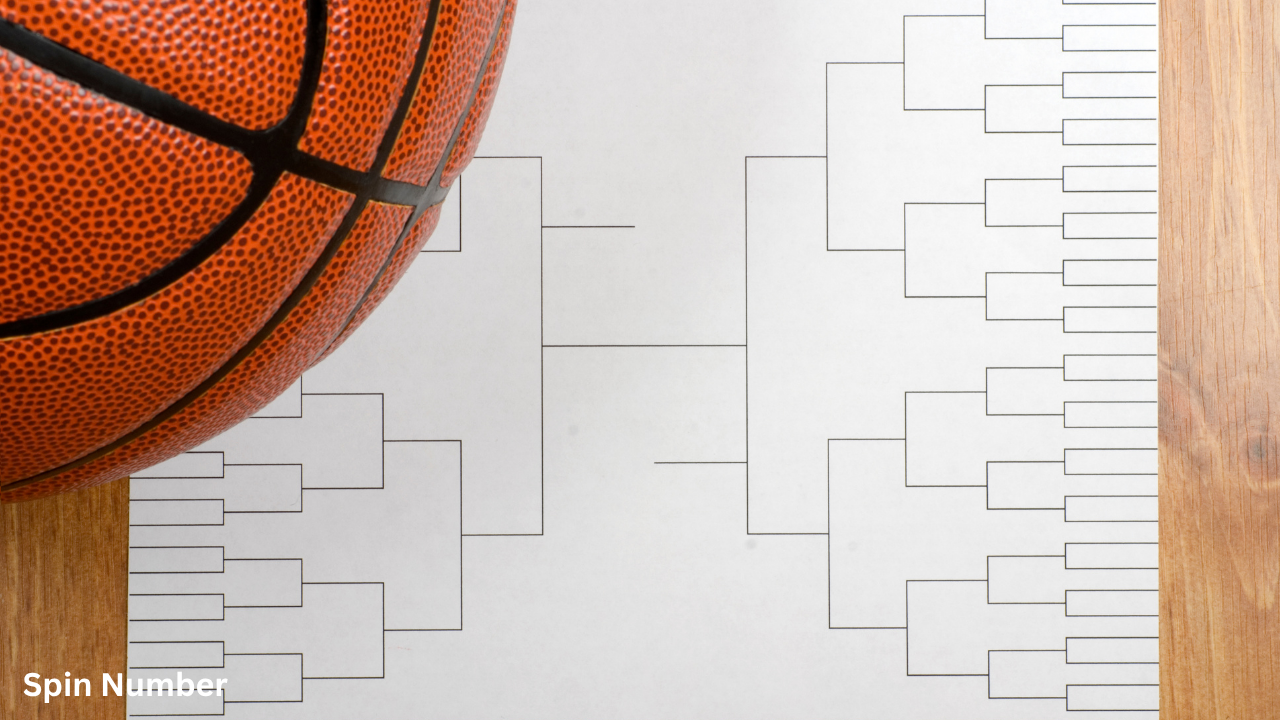
A tournament bracket is a diagram that maps out every match in a competition, showing how players or teams advance from the first round to the final. Each match feeds the winner into the next slot, narrowing the field round by round until one competitor remains.
The bracket is more than a schedule. It is the structure that guarantees fairness: it fixes the path each competitor must take, ensures everyone knows who they play next, and removes any suspicion that match-ups were arranged to favor someone. A clear bracket is what turns a pile of players into an orderly competition.
The Main Tournament Bracket Formats
Choosing the right tournament bracket format is the single most important decision, because it shapes how many games you play and how forgiving the competition is.
Single elimination
The classic knockout. Lose once and you are out. A single elimination bracket is fast, easy to follow, and ideal when you have limited time or many competitors. Its weakness is that one bad game ends your tournament, and a strong competitor can be knocked out early by an unlucky draw.
- Best for: large fields, tight schedules, casual events.
- Games needed: with N players, it takes N minus 1 games to find a winner.
Double elimination
Here a competitor must lose twice to be eliminated. Players who lose once drop into a “losers” bracket and can fight their way back. It is fairer, since a single off-game does not end your run, but it needs roughly twice as many games and a more complex diagram.
- Best for: competitive events where fairness matters more than speed.
- Games needed: about 2N games.
Round robin
Everyone plays everyone. There is no knockout; a winner is decided by overall record. Round robin is the fairest format of all, because the outcome does not hinge on a single match or a lucky draw, but it only works for smaller groups since the number of games grows quickly.
- Best for: small groups, leagues, when every game counts.
- Games needed: N times N minus 1, divided by 2, which rises steeply as players increase.
How Seeding Works
Seeding is the process of ranking competitors before the tournament so the strongest are spread across the bracket rather than clustered together. The top seed is placed to meet the lowest-ranked players early and, ideally, the second seed only in the final.
Why seeding matters in a tournament bracket: without it, the two best teams could be drawn to meet in round one, knocking one out far too early and leaving a weaker side to reach the final. Proper seeding protects the integrity of the competition so the best match-ups happen when they should, at the end. Mathematicians have even formalized what fair seeding should satisfy, including that the top players never meet until the field has been narrowed to their number (Schwenk, 2000).
The standard method pairs highest against lowest in each round: seed 1 plays the bottom seed, seed 2 plays the second-bottom, and so on. In a balanced eight-player bracket, the first-round match-ups are 1 vs 8, 4 vs 5, 3 vs 6, and 2 vs 7, which keeps the top seeds apart until the later rounds.
When to seed and when to randomize
Seeding assumes you know how strong each competitor is. When you do not, or when you want a purely neutral draw, randomize instead. A random draw is also the fairer choice for casual events where ranking players openly might cause friction. To split entrants or assign a random draw order, drop names into the random name picker or, for team events, the sport teams wheel.
How to Handle Byes
A tournament bracket works cleanly only when the number of competitors is a power of two: 4, 8, 16, 32. When your field is not, you use byes.
A bye is a free pass through the first round. If you have 13 players, the next power of two up is 16, so you need three byes (16 minus 13). Those three byes go to the top three seeds, who skip round one and enter in round two. This is both standard and fair: the strongest players earn the small advantage, and the bracket stays balanced.
The key rule is to assign byes to the highest seeds, never at random and never to fill convenience. Handing a bye to a lower seed distorts the bracket and undermines the seeding you just did.
How to Make a Tournament Bracket Step by Step
Here is the full process for building a tournament bracket, whether you draw it by hand or use a generator.
- Count your competitors. Confirm the final number before you start, since a late entry can force a full redraw.
- Pick a format. Single elimination for speed, double for fairness, round robin for small groups. Match the format to your time and stakes.
- Seed or randomize. Rank competitors if you can judge strength, or draw randomly for a neutral or casual event.
- Add byes if needed. Round up to the next power of two and give the byes to the top seeds.
- Fill the bracket. Place competitors so seeds are spread correctly, then pair them round by round.
- Set the schedule. Assign times and locations so players know when and where each match happens.
A digital bracket generator automates steps four and five, calculating byes and placing seeds correctly so you do not have to.
Real-World Uses
A tournament bracket fits far more than pro sports.
- Offices. Ping-pong, foosball, or chess ladders that build friendly rivalry and team spirit.
- Schools and clubs. Class tournaments, sports days, and after-school competitions that need a clear, fair structure.
- Game nights. Video-game, card, or board-game championships among friends.
- Community sports. Local leagues and weekend tournaments where balanced match-ups keep things fun and credible.
- Online competitions. Esports and remote contests that rely on a visible bracket everyone can follow.
For the games themselves, pair a bracket with our spin the wheel games or minute to win it games to run a quick, lively championship.
Best Practices
A few habits keep a tournament bracket fair and dispute-free.
- Lock entries before you draw. Late additions force a redraw. Confirm the field first.
- Make the bracket visible. A bracket everyone can see, on a wall or a shared screen, prevents disputes and builds anticipation.
- Match format to time. Do not run a round robin for twenty people in one afternoon, or a single elimination for a serious title you want decided fairly.
- Seed honestly or randomize openly. Either rank by genuine strength or draw at random in front of everyone. A quietly “arranged” draw destroys trust.
- Plan for ties and no-shows. Decide in advance how ties are broken and what happens if someone does not turn up, so the day is not derailed.
Common Mistakes to Avoid
Even a well-drawn tournament bracket can go wrong in these ways.
- Ignoring seeding entirely. A purely random draw in a competitive event can pit the two best players in round one. Seed when strength is known.
- Putting byes in the wrong place. Byes belong with the top seeds. Giving them to lower seeds unbalances the whole bracket.
- Choosing the wrong format. Single elimination for a title that deserves fairness, or round robin for a huge field, frustrates everyone. Match format to the event.
- Redrawing mid-tournament. Changing the bracket after games begin breaks its integrity. Lock it before round one.
- Hiding how the draw was made. Whether you seed or randomize, do it openly. Transparency is what makes the result feel fair.
Frequently Asked Questions
What is a tournament bracket? It is a diagram that maps every match in a competition, showing how competitors advance round by round until one winner remains. It fixes who plays whom and guarantees a fair, orderly structure.
What is the difference between single and double elimination? In a single elimination bracket, one loss eliminates you. In double elimination, you must lose twice, since a first loss drops you into a losers bracket where you can recover. Single is faster; double is fairer.
How do I make a tournament bracket with an odd number of players? Round up to the next power of two and add byes for the difference, assigning them to the top seeds. For example, 13 players need three byes to reach a 16-slot bracket.
What does seeding mean in a tournament bracket? Seeding ranks competitors so the strongest are spread apart, with the top seed meeting weaker players first and the best match-ups saved for later rounds. It prevents top contenders meeting too early.
Should I seed or draw randomly? Seed when you can fairly judge strength and the event is competitive. Randomize for casual events, or when ranking players openly would cause friction, since a random draw is neutral and dispute-free.
How many games are in a single elimination tournament? With N competitors, a single elimination bracket needs N minus 1 games, because every game eliminates exactly one player and all but the winner must be eliminated.
Conclusion
A good tournament bracket is the quiet engine of a great competition. It decides the format, spreads the strongest competitors through smart seeding, handles uneven numbers with byes, and lays out every match before the first whistle, so the event runs smoothly and everyone trusts the result.
Count your field, choose the tournament bracket format that fits your time and stakes, seed honestly or draw openly at random, and lock the bracket before play begins. Do that, and you will spend the day enjoying the games instead of refereeing arguments about fairness. Bookmark this page, and your next tournament will be the best-organized one your group has run.
References
Schwenk, A. J. (2000). What is the correct way to seed a knockout tournament? The American Mathematical Monthly, 107(2), 140-150. https://doi.org/10.1080/00029890.2000.12005171