By Spin Number · June 2026 · 11 minute read
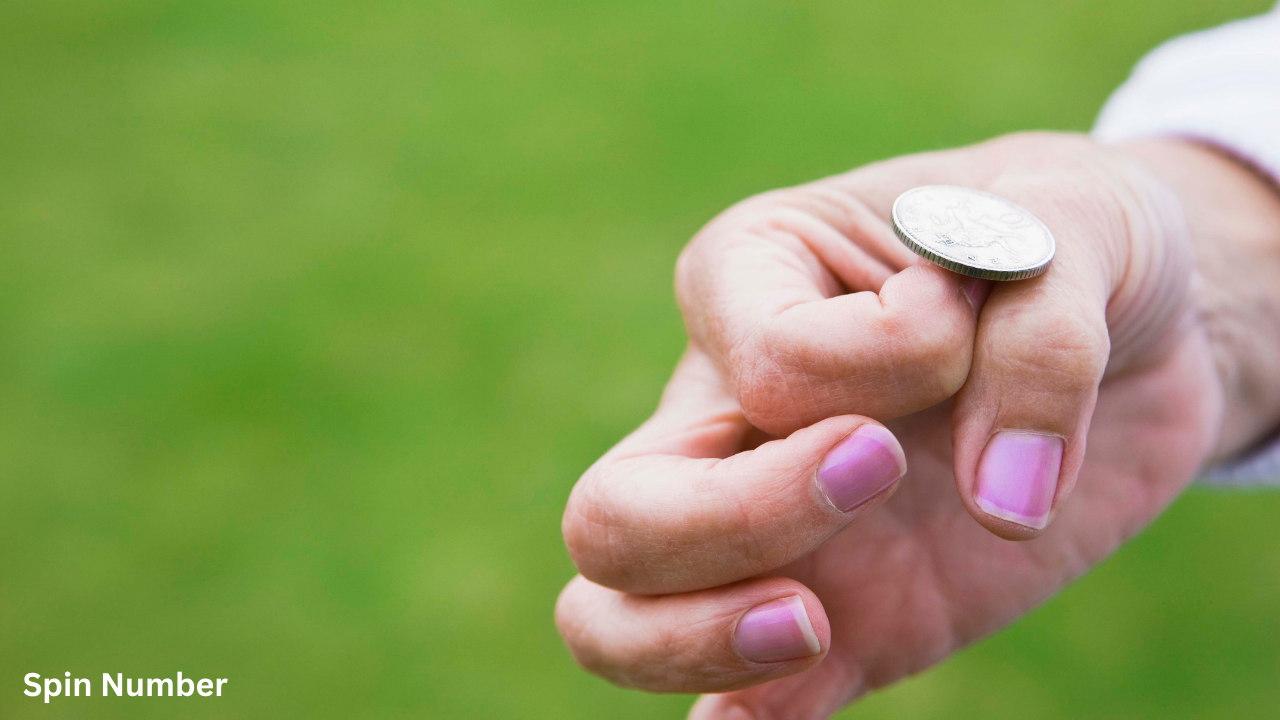
You flip a coin, it spins through the air, and somewhere before it lands you catch yourself hoping for one side. That tiny moment is the real magic of a coin toss, and it is why people flip a coin to settle arguments, start games, and even make life decisions, and have done so for thousands of years. A coin is the simplest fair decision-maker ever invented: two outcomes, even odds, instant answer.
This guide goes beyond “heads or tails.” You will learn whether a coin flip is truly 50/50 (the science here is genuinely surprising), how a virtual coin toss works and why it can be fairer than a real one, the clever psychology that makes flipping a coin so useful for indecision, and exactly when you should and should not let a coin decide. By the end you will see a humble coin toss as a smarter tool than it gets credit for.
Table of Contents
What “Flip a Coin” Really Means
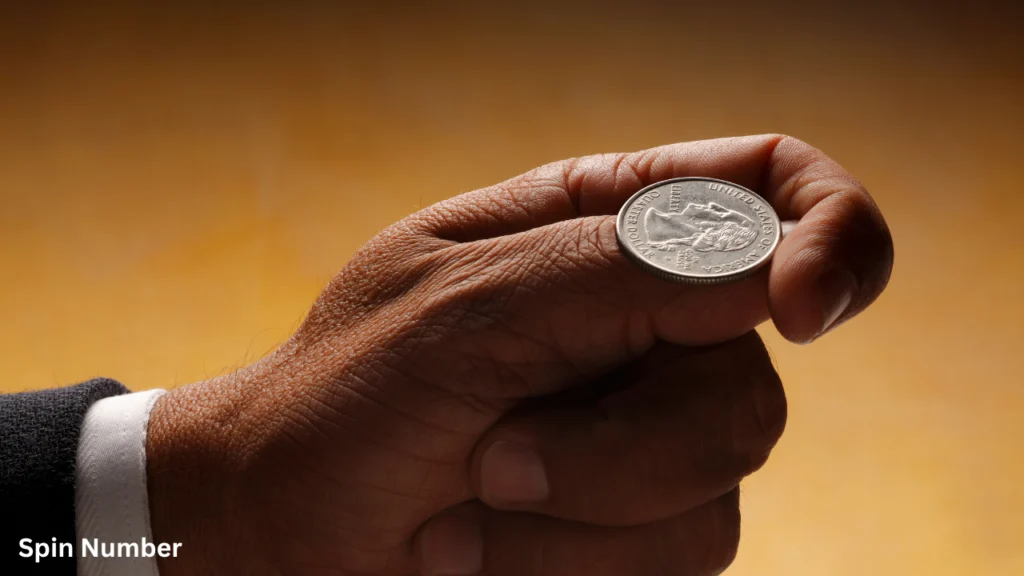
To flip a coin is to settle a two-way choice by chance: you assign one option to heads and the other to tails, send the coin spinning, and accept whatever lands. It is the purest form of a fair, binary random choice, which is why it has been the universal tiebreaker for centuries.
The appeal is its perfect simplicity. There is nothing to set up, no bias anyone can argue with, and only two possible answers. When two people cannot agree or one person cannot decide, you flip a coin and get an instant, neutral verdict that both sides accept.
Is a Coin Flip Truly 50/50?
Here is where it gets interesting, because the honest answer is “almost, but not quite.” For decades everyone assumed that when you flip a coin it was a perfect 50/50. Then the math and the data complicated the picture.
A 2007 physics model by Diaconis, Holmes, and Montgomery predicted that when you flip a coin it has a slight tendency to land on the same side it started, because of a small wobble human thumbs introduce as the coin spins (Diaconis, Holmes, & Montgomery, 2007). They estimated the bias at about 51%.
For years this was just a prediction. Then a team recruited dozens of people to flip coins an astonishing 350,757 times to test it. The result confirmed the theory: coins landed on the same side they started about 50.8% of the time, a small but real bias (Bartoš et al., 2023).
But read that carefully, because the practical takeaway is reassuring. The bias is about the starting side, not about heads or tails. When the person calling cannot see which side is up before the flip, the same study found the outcome is a clean 50/50. In other words, a coin toss is perfectly fair as long as the caller does not know the starting position, which is exactly how a normal toss works anyway.
How a Virtual Coin Flip Works
An online coin flip skips the physics entirely. Instead of a spinning disc, it uses a random number generator: the software produces a random value and maps half the outcomes to heads and half to tails, delivering a result with no wobble, no thumb, and no starting side to bias it.
That makes a virtual coin flip arguably more fair than a physical one. There is no same-side bias to exploit, no weighted or trick coin, and no sleight of hand. For any situation where trust matters, settling a bet, picking who goes first, making a decision in front of others, a virtual coin toss is transparent and genuinely even. It also never rolls under the couch.
The Real Reason a Coin Flip Helps You Decide
Here is the secret that has nothing to do with probability: most of the time, the coin is not actually making your decision for you. It is revealing the decision you already wanted.
Think about the last time you flipped a coin for something you cared about even a little. The instant it was in the air, you felt a flicker of hope for one result, or a small sink of disappointment when it landed the “wrong” way. That reaction is the real answer. The coin did not choose; it forced your gut to speak before your overthinking brain could drown it out.
This is why choosing to flip a coin is such a good tool for the indecisive. You do not have to obey the result. You just have to notice how you feel about it. If the coin says “stay” and your stomach drops, you have learned what you actually want. The toss is a mirror, not a master.
What the Research Says About Big Decisions
There is even evidence that leaning on a coin can make people happier, in a roundabout way. Economist Steven Levitt ran a large experiment where thousands of people stuck on a real decision (quit a job, end a relationship, make a big change) agreed to flip a coin to help decide. Heads meant make the change; tails meant keep things as they are.
The finding was striking. People nudged by the coin toward making a change were more likely to actually do it, and they reported being happier six months later than those told to stay put (Levitt, 2016). His interpretation: when we are torn about a big change, we tend to be too cautious, and the coin gives us permission to do the thing we were already leaning toward.
A careful caveat: this does not mean you should flip a coin for serious decisions and blindly obey it. The lesson is subtler. The coin helped because it broke a deadlock and surfaced a preference, not because chance picks well. For weighty choices, use the toss as a gut-check, not a verdict.
When to Flip a Coin
Choosing to flip a coin is the right call more often than people think. Reach for it when:
- The choice is trivial. Which restaurant, which movie, who gets the front seat. When the options are close and the stakes are low, a fast answer beats a long debate. Spending ten minutes deciding where the value is two minutes of difference is a bad trade.
- You need a fair tiebreaker. Who goes first, who gets the last slice, which team kicks off. The coin’s neutrality is its whole point.
- You are stuck and want a gut-check. Flip a coin, notice your reaction, and let that feeling inform you, whether or not you follow the result.
- A group cannot agree. A coin ends a stalemate instantly and impartially, with no hard feelings.
For trivial either-or choices you face often, a quick round of this or that questions or a spin of the Spin Number wheel does the same job with a bit more fun.
When Not to Flip a Coin
Choosing to flip a coin is fast, which makes it the wrong tool for slow, important decisions.
Do not flip a coin when a choice genuinely deserves thought: major financial moves, big career or health decisions, anything with serious consequences or where the options are not actually equal. Chance does not weigh trade-offs, consider your values, or account for information you have not gathered yet. Outsourcing a real decision to a coin is a way of avoiding the work of deciding.
This connects to a wider truth about choosing well. Much of our difficulty with decisions comes not from too few options but from too many, a trap explored in the paradox of choice, and from the mental exhaustion of deciding all day, known as decision fatigue. The smart move is to save your real deliberation for decisions that matter and let a coin or a wheel handle the trivial ones, so you are not spending precious mental energy on what to eat for lunch.
How to Flip a Coin Fairly
When you flip a coin physically, fairness is simple if you follow a few rules:
- Assign the sides clearly. State out loud which option is heads and which is tails before the flip, so there is no dispute after.
- Let the caller call in the air. The person calling should call heads or tails while the coin is spinning, not before you pick it up, and ideally without seeing which side started up.
- Give it a real flip. A proper toss has the coin rotating several times, not a lazy half-turn. More spin means a cleaner result.
- Catch and reveal, or let it land. Either catch it and flip it onto the back of your hand or let it settle on a flat surface. Pick one method and stick to it.
If you want zero doubt, a virtual coin flip removes every one of these concerns at once.
A Brief History of the Coin Toss
The coin toss is genuinely ancient. The Romans called it “navia aut caput,” ship or head, after the images stamped on their coins, and treated the result as the will of the gods. For most of history, a coin flip was not just a tiebreaker but a way of letting fate, or the divine, make a call no human wanted to own.
Today the coin toss opens football games, settles tied elections in some jurisdictions, and decides countless small disputes every day. The technology has not changed in two thousand years, only our understanding of the physics behind it.
Common Misconceptions
- “A coin remembers previous flips.” It does not. After five heads in a row, the next flip is still 50/50. Believing otherwise is the gambler’s fallacy.
- “A coin flip is perfectly 50/50.” Almost. There is a tiny same-side bias in physical flips, removed entirely when the caller cannot see the starting side, and absent altogether in a virtual flip.
- “The coin decides for me.” Usually it does not. It reveals the preference you already had by making you react to the result.
- “Tossing higher changes the odds.” More spin makes a flip cleaner and fairer, but it does not favor heads or tails.
Frequently Asked Questions
Is flipping a coin really fair? Effectively yes. Physical coins have a tiny tendency to land on their starting side, but when the caller cannot see that side it is a true 50/50. A virtual coin flip is fair by design, with no physical bias at all.
Are coin flips actually 50/50? Heads versus tails is 50/50 in a normal toss. The only documented bias is toward the side that started face-up, about 50.8%, and it disappears when the starting side is hidden.
How does an online coin flip work? It uses a random number generator to pick an outcome and maps it to heads or tails. Because there is no physical spin, there is no same-side bias, which makes a virtual coin toss completely even.
Should I make important decisions by flipping a coin? Not directly. Use a coin to break a deadlock or as a gut-check, noticing how you feel about the result, but reserve real deliberation for choices with serious consequences.
Why does flipping a coin help me decide? Because the moment it is in the air, you usually realize which side you were hoping for. The coin surfaces a preference you already had rather than choosing for you.
What is the fairest way to flip a coin? Assign the sides out loud, have the caller call in the air without seeing the starting side, and give it a full spin. For zero doubt, use a virtual coin flip.
Conclusion
A coin toss looks like the simplest tool in the world, and in a sense it is, but it is smarter than it appears. The science says it is essentially fair, a virtual flip even more so. The psychology says it does its best work not by choosing for you but by revealing what you already want. And the research suggests we are often too cautious about change, so the permission a coin grants can genuinely help.
Use it well: flip a coin for the trivial ties and the friendly tiebreakers, treat it as a gut-check when you are stuck, and keep your real deliberation for the decisions that earn it. Notice how you feel when it lands, because that feeling is usually the answer you were looking for. Bookmark this page, and the next time you are torn, you will know exactly when to flip a coin and let it decide.
References
Bartoš, F., Sarafoglou, A., Godmann, H. R., Sahrani, A., Klein Leunk, D., Gui, P. Y., et al. (2023). Fair coins tend to land on the same side they started: Evidence from 350,757 flips. arXiv. https://doi.org/10.48550/arXiv.2310.04153
Diaconis, P., Holmes, S., & Montgomery, R. (2007). Dynamical bias in the coin toss. SIAM Review, 49(2), 211-235. https://doi.org/10.1137/S0036144504446436
Levitt, S. D. (2016). Heads or tails: The impact of a coin toss on major life decisions and subsequent happiness (NBER Working Paper No. 22487). National Bureau of Economic Research. https://doi.org/10.3386/w22487