By Spin Number · June 2026 · 9 minute read
You ask a class of twenty-eight a good question. Twenty-six pairs of eyes drop to the desk. The same two hands go up, you take an answer, and you move on. In the back row, a student who knew the answer quietly relaxes, because they were never going to be called on anyway. That moment is not just a missed answer. It is the participation gap forming in real time, and it repeats in classrooms every day.
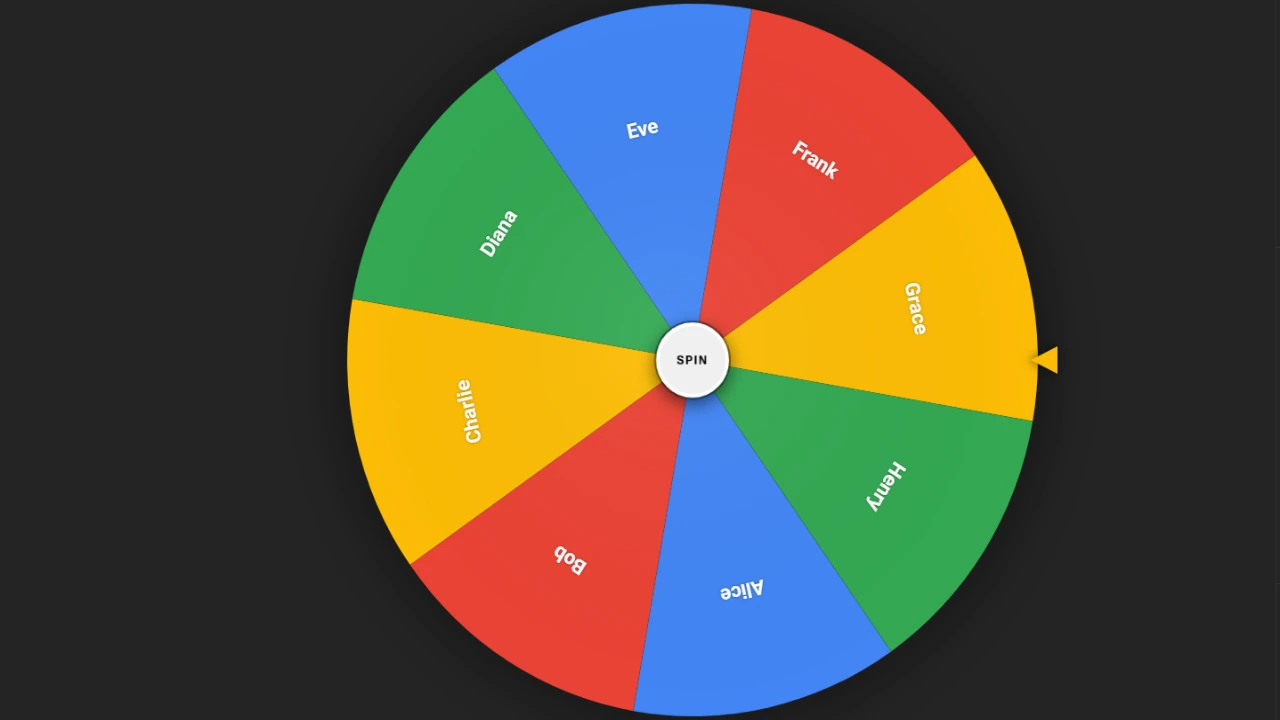
A random name picker breaks that pattern. Instead of you choosing, consciously or not, the tool draws a name at random, so the quiet student in the back has the same chance as the eager one in the front. When that random name picker runs on a visible spinning wheel, the draw stops feeling like being singled out and starts feeling fair, which changes how students react to it.
This guide covers how a random name picker works, the research on why random selection helps (and the one place it can backfire), three classroom routines that actually work, and how to handle the common objections. Skip to the routines if you just want to start using it tomorrow.
Table of Contents
What a Random Name Picker Does, and Why It Matters
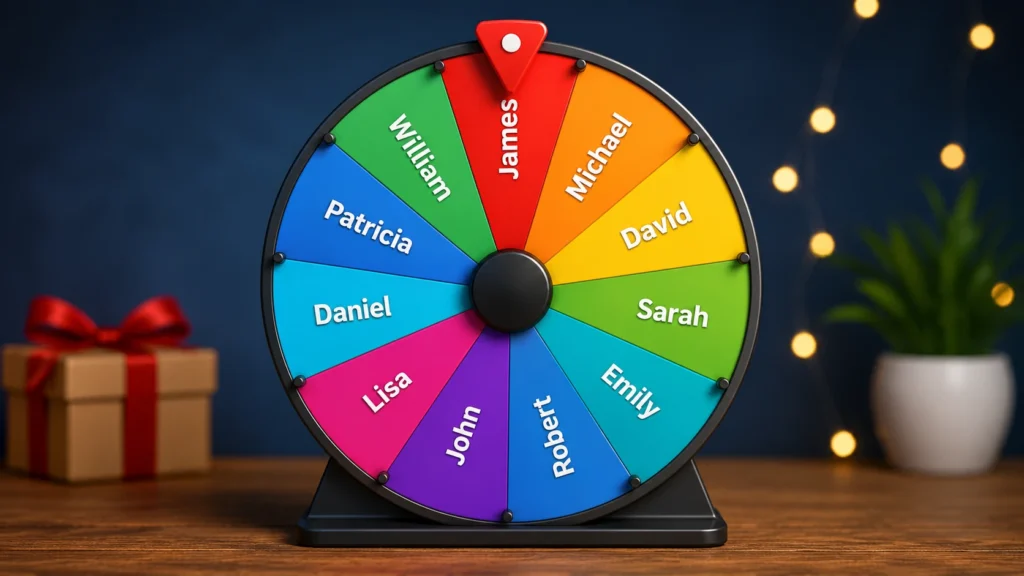
A random name picker selects one name at random from a list you provide. The low-tech version is names in a hat. The version worth using shows every name on a wheel, draws one with no bias toward any entry, and makes the result visible to the whole room so nobody can question it.
The reason it matters in a classroom is well documented. Studies of participation repeatedly find that voluntary answering is uneven and that the gap falls along predictable lines. Research on introductory courses found measurable gender gaps in who speaks up in active-learning classrooms, with men participating more than their numbers would predict (Eddy, Brownell, & Wenderoth, 2014). Teachers do not create this on purpose. Even careful instructors tend to call on students near the front, students who hold eye contact, or students whose names come to mind fastest. The effect on equity is real regardless of intent.
Random selection counters it directly. When the draw is random, participation is not voluntary, so no group can be over- or under-represented by who happens to be most confident. Studies of “random call” report that it broadens the range of voices heard and is associated with more equitable participation, including for women and other students who are otherwise underestimated by their peers (Dallimore, Hertenstein, & Platt, 2019). A random name picker is simply the fastest, most transparent way to put that principle into practice.
The Honest Caveat: Random Calling Can Raise Anxiety
Here is the part most tool guides leave out. The same randomness that improves equity can also stress students who fear being put on the spot, particularly those already carrying extra pressure. Researchers studying how instructors actually use random call found that anxiety is a genuine cost, and that the teachers who use it well take deliberate steps to soften it (Waugh & Andrews, 2020).
The practical fix is what some call a “warm” approach: tell the class in advance that you will use the wheel and that everyone will be called on, give the selected student a few seconds to think before answering, and allow a “pass” that you circle back to later. With that framing, the randomness reads as fair rather than threatening, and the advance warning lowers the dread instead of feeding it. Used this way, a random name picker raises participation without making class feel like an ambush.
How to Set Up a Random Name Picker in Under Two Minutes
Setting up a random name picker is quick even for a full class.
- Open the tool. Go to the classroom wheel. It loads ready to use, no account and no tutorial.
- Add your names. Type each name and press Enter, or paste a whole list at once if your tool supports it. Each name becomes a wheel segment and the wheel resizes to fit them all.
- Save the list for reuse. Use the share-link feature to save your exact class wheel, then bookmark it. Next lesson it opens in one click, so you only build each class once.
- Turn on Remove After Spin if you want each student called once before anyone repeats.
- Spin. Click the center or press the spacebar. The wheel slows over a few seconds and lands on a name in full view of the room.
For teachers who run several classes, keep one bookmarked wheel per class so you can switch lists in seconds. The Education templates also include ready-made options like Who Answers, Presentation Order, and Surprise Quiz that pair well with a name wheel.
A Random Name Picker vs Calling on Students by Hand
| Aspect | Calling by hand | Random name picker |
|---|---|---|
| Fairness | Subject to unconscious bias | Equal chance every draw |
| Engagement | Predictable, so many tune out | Unpredictable, so all stay alert |
| Perceived bias | Students may feel targeted | Visible and hard to dispute |
| Repeats | Easy to call the same few | Remove After Spin prevents repeats |
| Setup | None, but you carry the bias | Under 2 minutes, saved for reuse |
| Cost | Free | Free |
The table makes the trade clear, but the value shows up in specific routines. Here are three that work.
Three Classroom Routines That Work
Question and answer. This is where a random name picker earns its place. Ask the question first, then spin, so every student thinks before a name is drawn rather than only the person called. Turn on Remove After Spin so that across the lesson everyone gets exactly one turn. Pair this with the advance-warning rule above and it lands as fair, not frightening.
Group formation. Letting students self-select almost always rebuilds friendship groups. Spinning to assign students to teams in sequence produces genuinely mixed groups that no one can claim you engineered. Because the draw is visible, even students unhappy with their group accept that it was random.
Presentation order. Going first is nerve-wracking and going last buys prep time, so the order itself feels political. Drawing it on the wheel is read by students as the fairest possible method and skips the awkward wait for volunteers.
Common Objections and How to Answer Them
A few objections come up the first time a random name picker replaces hand-raising. Here is the honest answer to each.
“Some students get picked more than others.” Without Remove After Spin, the draw can land on the same name twice in a session, the same way a coin can show heads twice. Switch the setting on and each name leaves the wheel once drawn, so everyone comes up before anyone repeats.
“The wheel is rigged.” Skeptical students, especially older ones, suspect any tool they cannot see into. Beat it with visibility, not argument: project the wheel, let them confirm their own name is on it and every segment is the same size, and let a student press spin. Doubt fades fast when the draw happens in front of them.
“Entering names takes too long.” It takes a few minutes once. Save the wheel with a share link and it is a one-click open every lesson after that. Pasting a full class list at once, if your tool allows it, cuts the first setup to seconds.
“It makes anxious students worse.” Sometimes, if used cold. Use the warm approach from above: warn the class in advance, give thinking time, and allow a pass. Start with low-stakes uses (who reads next, who picks the warm-up) before high-stakes questioning so the tool feels routine.
Getting More From the Tool
Two wheels at once. Spin a name wheel to pick the student, then a second wheel to pick the question or topic. The double draw keeps even checked-out students alert, because they know neither who nor what until both wheels stop.
Equity over the term, not just the lesson. A single random draw is fair in the moment, but luck can still leave one student called three times in a fortnight and another never. Keep a simple tally across lessons so you can confirm the spread is even over time, which is the fairness that actually matters to students and parents.
Beyond the classroom. The same random name picker works for a meeting or workshop: speaking order, who takes which action item, or which agenda point to tackle when time is short. Content creators running prize draws will want the dedicated Giveaway Picker guide instead, which covers transparency and documentation for public giveaways.
Frequently Asked Questions
Is the random name picker free? Yes, fully free with no account, subscription, or hidden fees. Remove After Spin, confetti, sound, and the template library are all included.
How many names can I add to the random name picker? As many as you need. The wheel resizes segments and labels to stay readable whether you load five names or fifty.
Can I save my class list? Yes. Generate a share link, bookmark it, and your list is ready every time you open it with no re-entry.
Does it work on a smartboard or projector? Yes. The random name picker is responsive and scales to any screen, so it displays cleanly on smartboards, projectors, tablets, and phones.
Is the draw really unbiased? Every name has an equal chance on every spin, and the outcome cannot be predicted or steered. Showing the wheel on screen is what proves that to a skeptical room.
Final Word
A random name picker fixes a quiet, daily unfairness: the same few hands carrying every lesson while everyone else opts out. The research is clear that random selection broadens who speaks, and just as clear that it works best when paired with a little warmth, advance warning, thinking time, and the right to pass. Build your random name picker once, use it in the open, and let the draw share the floor evenly.
Open your classroom wheel, add your students, and let the spin decide.
References
- Dallimore, E. J., Hertenstein, J. H., & Platt, M. B. (2019). Leveling the playing field: How cold-calling affects class discussion gender equity. Journal of Education and Learning, 8(2), 14–24. https://doi.org/10.5539/jel.v8n2p14
- Eddy, S. L., Brownell, S. E., & Wenderoth, M. P. (2014). Gender gaps in achievement and participation in multiple introductory biology classrooms. CBE—Life Sciences Education, 13(3), 478–492. https://doi.org/10.1187/cbe.13-10-0204
- Waugh, A. H., & Andrews, T. C. (2020). Diving into the details: Constructing a framework of random call components. CBE—Life Sciences Education, 19(2), ar43. https://doi.org/10.1187/cbe.19-07-0130
- Sumeracki, M. A., & Castillo, J. (2022). Covert and overt retrieval practice in the classroom. Translational Issues in Psychological Science, 8(2), 282–293. https://doi.org/10.1037/tps0000332